Most small businesses can tell you roughly what they spend on expenses each year. Far fewer can produce anything in writing explaining how that money gets claimed, approved and paid. That gap tends to surface at the worst possible moment: a dispute with a long-standing employee, a query from HMRC, or a new starter who books a first-class rail ticket and assumes somebody will be fine with it.
A decent expenses policy is not a bureaucratic burden. It is usually two to four pages that answer three questions: what the business will pay for, what evidence is needed, and who signs it off. Below is a working checklist you can adapt, whether you have three employees or thirty.
Start with scope: who and what the policy covers
Be explicit about who can claim. Full-time employees, directors, part-time staff, contractors and casual workers are often treated differently, and the policy should say so. If contractors are expected to absorb their own costs as part of their day rate, write that down rather than leaving it to be argued over later.
Then list the expense categories you will consider. A typical small business covers travel, accommodation, subsistence, client entertaining, training, professional subscriptions, tools and materials, mobile phone costs and occasional home-office expenses. Naming the categories stops the awkward conversation where someone asks whether a £60 team lunch counts as "expenses" and nobody quite knows.
The core checklist
Whatever your sector, a compliant policy tends to include the same building blocks:
- A short statement of purpose, and a named person responsible for the policy
- Who is eligible to claim, including probationers and directors
- Which expense categories are claimable, with examples
- Standard class travel as the default, with the circumstances where an upgrade is acceptable
- Receipt and evidence requirements, including a claim deadline
- Approval routes and spending limits that trigger senior sign-off
- Mileage rates, and whether they follow HMRC's approved rates or a company scheme
- Rules on alcohol, entertaining and personal elements within a bill
- How claims are submitted — app, spreadsheet or accounting software — and how quickly they are paid
- What happens when a claim is late, inflated or unsupported by a receipt
- How the policy interacts with company cards and petty cash
- A review date, so the document does not fossilise
Receipts, evidence and record keeping
Vague wording here is the most common weakness. "Receipts should be provided where possible" gives nobody a workable rule. Try instead: claims under £10 do not need a receipt; anything above that does; and any claim without a receipt must be approved by a director.
For mileage, a simple log beats a round-number estimate. Ask for date, destination, business purpose and total miles. HMRC expects businesses to be able to back up what they have claimed, and records are generally kept for around six years. If you use software that captures a photograph of a receipt at the point of sale, say so — it genuinely reduces end-of-month chasing.
Setting reimbursement limits
Limits need to be realistic enough that people do not routinely breach them. Two areas matter most.
Mileage
Many small businesses simply follow HMRC's approved mileage allowance payments: 45p per mile for the first 10,000 business miles in a tax year and 25p thereafter for cars and vans, with lower rates for motorcycles and bicycles. Payments up to those levels are normally free of tax and National Insurance for employees. Rates do change, so check the current figures on GOV.UK before you print anything.
Subsistence and overnight stays
Meal allowances without receipts are possible, but they come with conditions attached. HMRC publishes benchmark scale rates for this purpose, and using them is generally cleaner than inventing your own figures. For hotels, a sensible cap per night by city works better than an open-ended promise to reimburse "reasonable" costs. If you offer a homeworking allowance, the HMRC flat rate is the obvious reference point — again, confirm the current figure.
The VAT angle most policies miss
If your business is VAT-registered, the policy should tell staff what to hand over and why it matters. A valid VAT invoice lets you reclaim the VAT on most business expenses, which quietly reduces the real cost of the claim by 20 per cent. Two traps are worth flagging in the document itself:
- Entertaining. VAT on client entertaining generally cannot be reclaimed, and the cost is usually not deductible for corporation tax either. Staff entertaining is treated differently for VAT. Say which is which so nobody guesses.
- Receipts made out to the employee. In some circumstances VAT can still be recovered on a receipt in an employee's name, but it is not automatic. Keep the original and check before assuming.
Fuel is another grey area: reclaiming VAT on mileage reimbursements depends on having the right paperwork and using the correct fuel element. It is worth a conversation with your accountant rather than a paragraph of guesswork in the policy. This article is general guidance, not tax advice.
Approval, payment and disputes
Name the approvers and the limits they hold, then state a payment cycle — for example, claims submitted by the 20th are paid with that month's payroll. Predictability matters more than speed. People tolerate a fortnightly cycle; they resent not knowing when money will arrive.
Finally, decide what happens when something goes wrong. A claim submitted three months late, a receipt for a personal purchase mixed into a hotel bill, an employee who repeatedly overspends without asking first. Set out the process: a conversation, then a written warning if the pattern continues. Written fairly, this protects the employee as much as the business.
Roll it out and review it
Send the policy to everyone, ask them to confirm they have read it, and keep a copy with your HR or onboarding documents. Then put a reminder in the diary for twelve months' time. Rates, software and working patterns shift, and a policy that has not been read since it was written is barely better than no policy at all. If you are unsure how a particular expense should be treated for tax, ask your accountant before you write it into the rules — editing the policy later is far easier than unpicking a year of claims.
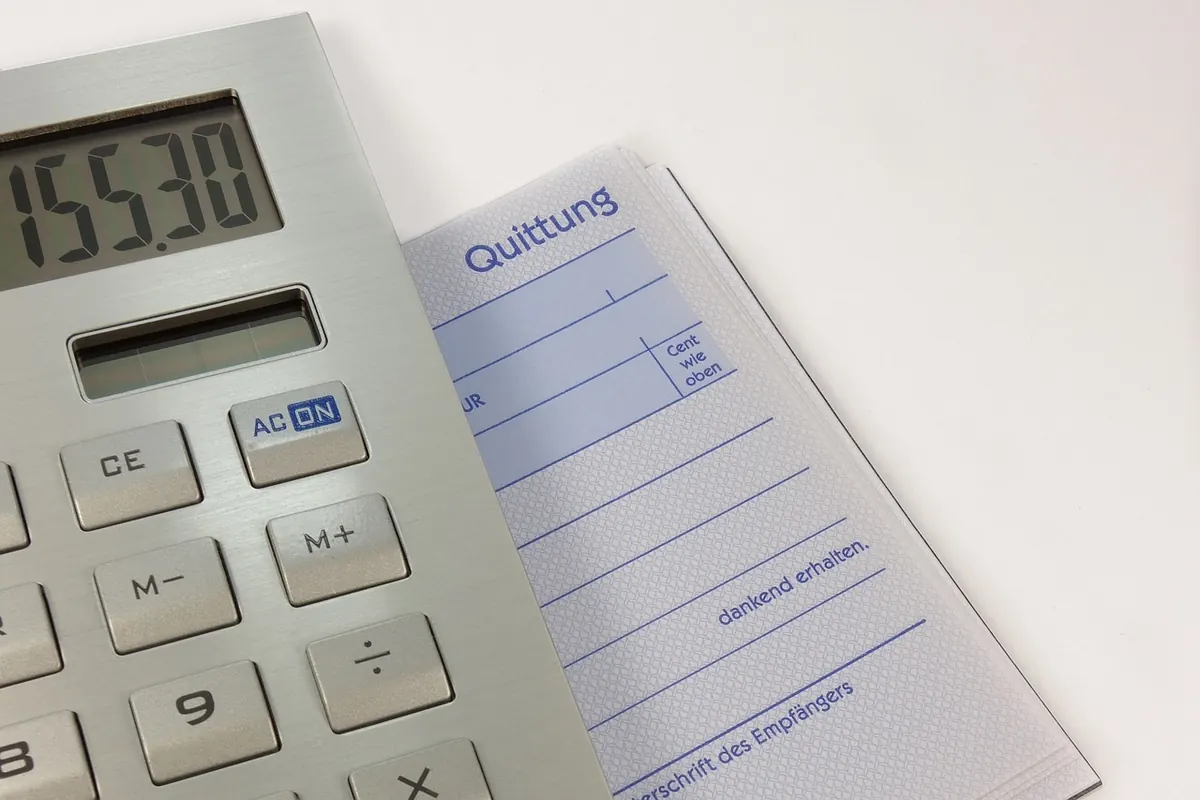
Photo: Juergen_Sieber / Pixabay